Designing High-End Vehicle Modifications Around Proportion, Surface Lines, and Visual Balance
High-end vehicle modification is not simply a matter of adding expensive components to an expensive vehicle. The difference between a refined build and a visually disconnected collection of aftermarket parts often comes down to proportion, surface relationships, stance, and visual balance. A modification can be individually impressive while still looking incorrect when it conflicts with the vehicle’s original architecture. For owners considering high-end car modifications in Miami, this distinction is particularly important. Luxury and performance vehicles are generally designed around carefully controlled proportions, aerodynamic surfaces, character lines, and dimensional relationships. Successful modification should enhance those characteristics rather than overwhelm them. A professional approach therefore begins with the vehicle as a complete visual system. Wheels, body components, paint, trim, ride height, exterior finishes, and other modifications should be evaluated in relation to the vehicle’s existing geometry. The objective is not merely to make the vehicle more noticeable. It is to make every modification appear intentional.
Why Proportion Matters in High-End Vehicle Modification
Proportion is one of the most influential elements in automotive design. It describes the relationship between different dimensions and components, including wheel diameter, tire sidewall, body height, track width, overhangs, window area, and overall vehicle length.
When these relationships are changed, the visual character of the vehicle changes with them.
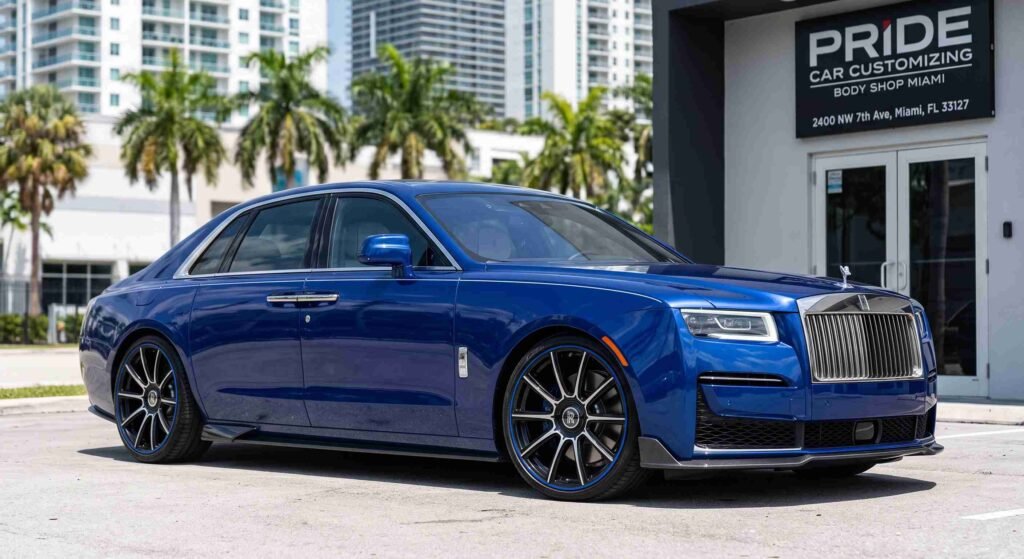
For example, installing significantly larger wheels can create a more aggressive appearance, but the result depends on the relationship between the wheel, tire, fender opening, ride height, and bodywork. If the wheel is visually too large or the tire profile is disproportionately thin, the vehicle may lose the balanced appearance intended by its original design.
The same principle applies to body modifications. A wider front fascia, extended side skirts, rear diffuser, spoiler, or fender treatment needs to relate naturally to the rest of the body. Increasing visual mass in one area without addressing corresponding areas can make the vehicle appear front-heavy or rear-heavy.
This is why luxury car modifications in Miami should be approached as an exercise in proportion rather than simply component selection.
Understanding the Vehicle’s Original Surface Lines
Modern vehicles contain numerous design lines that guide the eye across the body. These include shoulder lines, beltlines, character creases, rocker contours, fender transitions, hood surfaces, and aerodynamic channels.
These lines establish the visual direction of the vehicle.
A custom component that interrupts one of these lines can make the modification look aftermarket in the wrong sense. Conversely, a component designed and installed to continue an existing line can appear much more integrated.
This is especially relevant when modifying bumpers, fenders, side skirts, quarter panels, spoilers, and other exterior components. The shape of a new component should be considered alongside the surfaces immediately surrounding it.
Professional custom car modifications in Miami require attention to these transitions because the human eye quickly notices inconsistencies in surface flow. Even when individual components are high quality, poor integration can create an uneven visual rhythm.
Stance Is More Than Lowering a Vehicle
Vehicle stance is frequently associated with ride height, but stance involves much more than simply lowering suspension.
The relationship between the vehicle body, wheels, tires, wheel arches, and ground plane determines how the vehicle sits visually. Track width, wheel offset, tire dimensions, suspension geometry, and fender clearance all influence this relationship.
A carefully developed stance can make a vehicle appear more planted without making it look excessively modified.
However, lowering a vehicle without considering wheel fitment or suspension geometry can create undesirable proportions. Excessive lowering can also compromise drivability, clearance, and component longevity.
For a high-end vehicle, modification should preserve the characteristics that make the vehicle enjoyable to operate. Visual improvements should therefore be evaluated alongside practical requirements such as steering clearance, suspension travel, tire performance, and everyday road conditions.
Wheel and Tire Fitment as a Visual Foundation
Wheels occupy a significant portion of a vehicle’s visual field, making them one of the most influential modification categories.
Wheel diameter, width, spoke design, finish, offset, and tire profile all contribute to the vehicle’s appearance. Yet the correct choice depends on the specific vehicle rather than the wheel itself.
A wheel that looks appropriate on one luxury vehicle may appear oversized or visually weak on another. The brake package, fender design, body color, and overall vehicle proportions all affect how the wheel is perceived.
Premium vehicle modifications therefore require careful consideration of wheel-to-body relationships. A sophisticated wheel setup should support the vehicle’s existing design language rather than compete with it.
Finishing also matters. Gloss, satin, metallic, brushed, or darker wheel treatments can produce substantially different visual effects. The appropriate finish depends on the paint, trim, body modifications, and desired level of contrast.
Creating Visual Weight Across the Vehicle
Every modification adds a certain amount of visual weight. Large grilles, aggressive bumpers, wide fenders, dark wheels, carbon-fiber components, and contrasting trim can all make specific areas appear heavier.
The challenge is distributing that weight appropriately.
If the front of a vehicle receives an aggressive transformation while the rear remains visually understated, the vehicle can appear unbalanced. Similarly, large wheels combined with minimal exterior changes can make the lower portion of the vehicle visually dominant.
Professional premium vehicle modifications in Miami should therefore consider the vehicle from multiple angles rather than evaluating components individually.
Front, side, rear, and three-quarter views reveal different relationships. A modification that looks effective from the front may create an awkward transition along the side. Evaluating the complete vehicle helps identify these inconsistencies before permanent work begins.
Paint and Finish Should Support the Modification
Paint is not simply the final decorative layer of a modification. It can influence how body surfaces, contours, and components are perceived.
Dark colors can visually reduce the apparent size of certain surfaces, while lighter finishes can emphasize body contours. Gloss levels also influence how strongly a surface reflects light.
This becomes particularly important when combining painted panels with carbon fiber, metallic trim, gloss-black components, or other contrasting finishes.
A professional build should establish a clear relationship between these surfaces. Too many unrelated finishes can fragment the vehicle visually. A controlled combination of materials can instead emphasize specific areas without creating unnecessary visual noise.
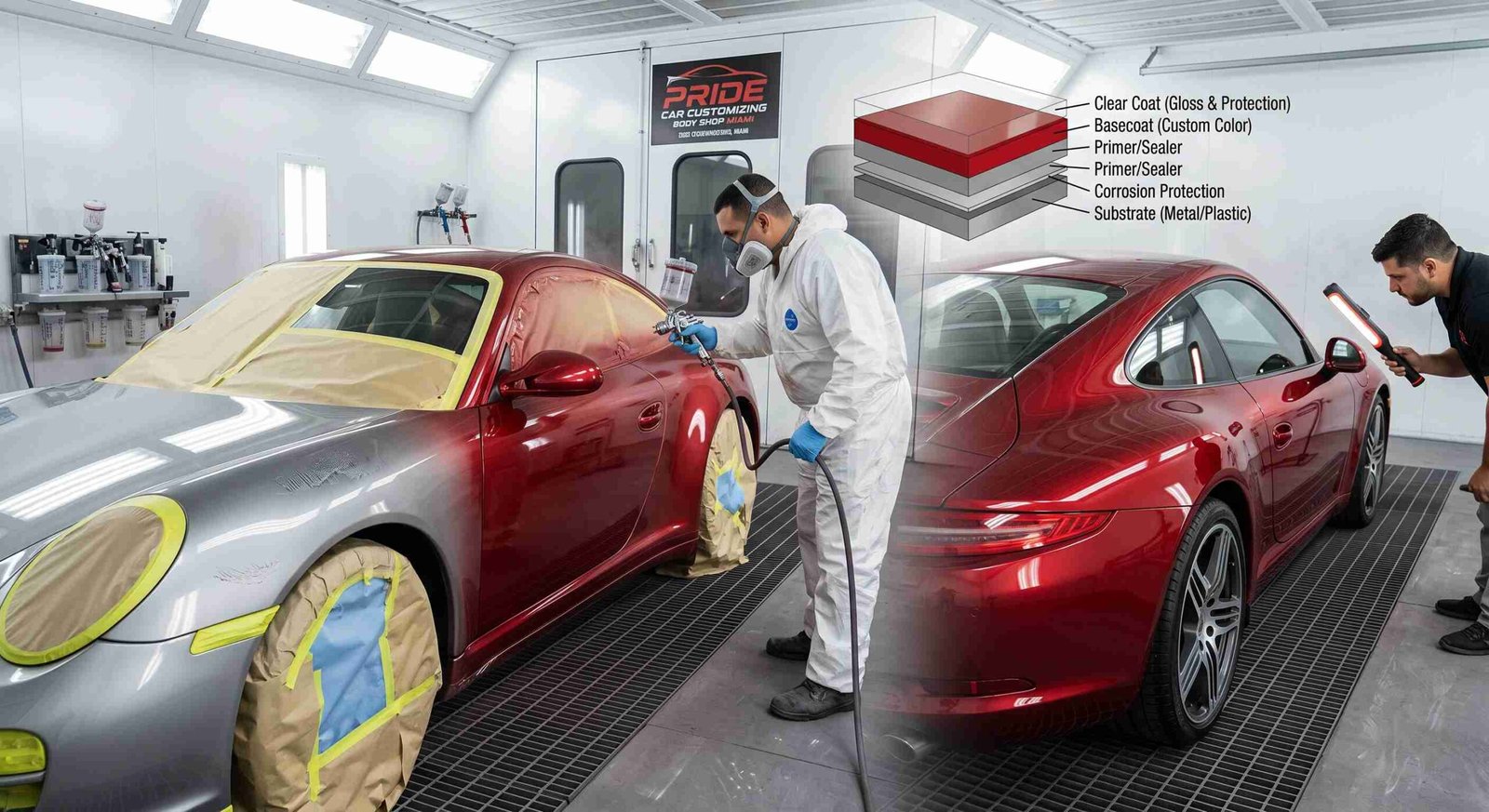
Paint quality is equally important. Custom bodywork and premium modifications can lose their visual impact when panel preparation, color matching, blending, or clear-coat finishing is inconsistent.
Body Modifications Should Follow the Vehicle’s Architecture
A high-end modification should respect the underlying architecture of the vehicle.
The hood, roofline, greenhouse, beltline, fenders, doors, and rear quarter areas establish the vehicle’s fundamental shape. Exterior modifications should work within that framework.
This does not mean every modification has to be subtle. Wide-body conversions, custom bumpers, aggressive aerodynamic components, and other substantial transformations can produce dramatic results when their geometry is properly integrated.
The critical factor is continuity.
A modified fender should connect naturally with the bumper and side skirt. A side skirt should relate to the rocker panel and wheel position. A rear diffuser should complement the width and visual mass of the rear fascia.
When these elements are treated independently, the vehicle can look assembled rather than designed.
The Importance of Negative Space
Automotive design is influenced not only by the physical components but also by the empty spaces between them.
Wheel arch clearance, grille openings, bumper recesses, gaps between body surfaces, and the visual space beneath the vehicle all contribute to perceived balance.
Negative space is particularly important in aggressive builds. Adding more material does not automatically improve the design. In some cases, retaining carefully controlled open areas creates a cleaner and more expensive appearance.
This is one reason experienced high-end auto customization in Miami involves restraint as well as fabrication. Knowing what not to add can be just as important as knowing what to install.
Coordinating Exterior Modifications With the Interior
Although proportion and surface lines are most immediately visible from the exterior, the overall vehicle experience can become more cohesive when exterior and interior modifications share a common visual direction.
This does not require identical colors or materials throughout the vehicle. Instead, relationships can be established through repeated details.
For example, a specific accent color used subtly on the exterior could appear in interior stitching. A particular material finish could be repeated in selected interior trim. Metallic, carbon, leather, or contrasting elements can be coordinated without making the interior look overly themed.
The objective is continuity rather than duplication.
Material Selection Influences Perceived Quality
High-end modification is also a material exercise.
Carbon fiber, premium leather, forged wheels, aluminum, stainless steel, high-quality polymers, and specialized automotive finishes can each contribute to a premium result. However, expensive materials do not automatically create an expensive-looking vehicle.
Fitment, surface finishing, consistency, and installation quality determine how those materials are perceived.
A poorly fitted carbon component can look less refined than a correctly fitted conventional component. Likewise, inconsistent gaps, exposed fasteners, uneven finishes, or poorly integrated trim can undermine an otherwise expensive build.
This is why professional car modifications in Miami should place as much emphasis on execution as on parts selection.
Modification Scale Should Match Vehicle Character
Not every vehicle benefits from the same degree of modification.
A luxury sedan, exotic sports car, high-performance SUV, classic vehicle, and premium grand tourer each communicate different design characteristics. The modification strategy should account for those differences.
A dramatic wide-body transformation may be appropriate for a performance-oriented vehicle but could conflict with the intended character of a refined luxury sedan. Conversely, subtle wheel, paint, trim, and interior changes may not provide enough visual transformation for an owner seeking a fully customized appearance.
The correct approach depends on the vehicle, its existing design language, how it is used, and the owner’s desired result.
Why Digital Planning Can Improve Modification Accuracy
Before fabrication or permanent installation begins, visual planning can help evaluate relationships between proposed components.
Digital renderings, reference imagery, dimensional specifications, and component mockups can help establish direction before substantial work begins. These tools are especially useful when several modifications will be performed together.
Planning allows potential conflicts to be identified early. Wheel dimensions can be evaluated alongside fender width. Body extensions can be considered in relation to ride height. Paint and trim combinations can be reviewed before finishing.
The goal is not to replace craftsmanship with digital visualization. Instead, planning gives craftsmanship a more precise direction.
Balancing Appearance With Everyday Usability
A high-end modification should also be evaluated against the vehicle’s real operating environment.
Miami driving can involve intense sun, heavy rain, uneven road surfaces, traffic congestion, parking structures, speed bumps, and frequent stop-and-go conditions. A vehicle modified exclusively for appearance may become difficult to use if ground clearance, wheel protection, suspension travel, or exterior durability are overlooked.
This is particularly important for vehicles that serve as daily transportation.
A professional modification strategy considers how the owner actually drives the vehicle. A show-focused build, weekend performance car, luxury daily driver, and frequently driven SUV may all require different technical decisions.
Craftsmanship Is What Makes the Design Look Intentional
Design determines the direction of a modification, but craftsmanship determines whether that direction survives execution.
Panel gaps need to remain consistent. Components must align correctly. Surface transitions should be smooth. Fasteners and mounting points should be properly integrated. Paint and finishing should be consistent across modified and original areas.
These details are often more noticeable on high-end vehicles because their factory construction establishes a high visual standard.
For this reason, selecting individual parts is only one part of the customization process. The quality of fabrication, preparation, installation, refinishing, and final inspection has a direct effect on the finished appearance.
How to Evaluate a High-End Modification Concept
Before committing to a major transformation, vehicle owners should evaluate the proposed design as a complete system. Consider the vehicle’s original proportions, intended use, wheel and tire relationship, ride height, body surface lines, material combinations, paint strategy, and interior relationship.
It is also important to distinguish between a modification that photographs well and one that remains visually coherent from every angle. High-end customization should look intentional in person, under different lighting conditions, and after the initial novelty of the modification has faded.
The strongest builds typically have a clear design logic. Each component has a reason for being there, and the individual modifications reinforce one another rather than competing for attention.
Professional High-End Car Modifications in Miami
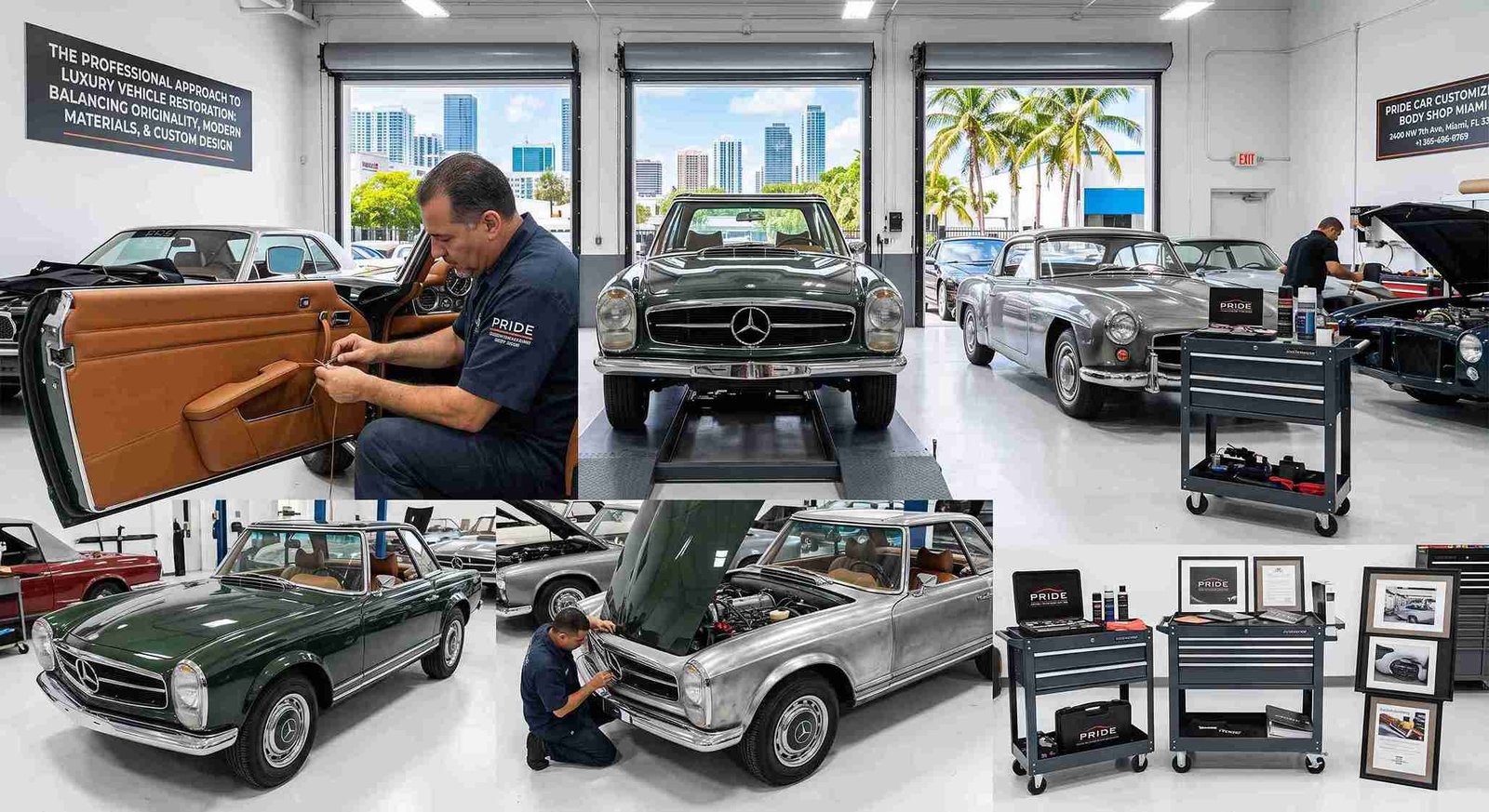
High-end customization requires more than access to premium parts. It requires an understanding of automotive proportions, surface geometry, material behavior, finishing techniques, fitment, and the practical requirements of the vehicle.
At Pride Car Customizing Body Shop Miami, professional customization can bring together bodywork, paint, wheels, interior enhancements, refinishing, protection, and other vehicle modification services according to the needs of the specific project.
For owners exploring high-end car modifications in Miami, the most important starting point is not choosing the most dramatic component. It is establishing a clear modification direction that respects the vehicle’s proportions while achieving the desired transformation.
A well-executed custom vehicle should look deliberately designed rather than modified. When proportion, surface lines, stance, materials, and finishing work together, even substantial changes can appear integrated and sophisticated.
Conclusion
Successful high-end vehicle modification is ultimately an exercise in controlled design. Proportion establishes the foundation, surface lines provide visual direction, stance determines how the vehicle sits, and material and finish choices influence perceived quality.
When these elements are coordinated, modifications can substantially change a vehicle without making the result appear disconnected from its original architecture. For Miami vehicle owners considering a premium transformation, professional planning and precise execution are essential to achieving that level of integration.
Pride Car Customizing Body Shop Miami
2400 NW 7th Ave, Miami, FL 33127
Phone: +1 305-498-6789