High-End Automotive Customization in Miami How Climate, Driving Conditions, and Vehicle Use Should Influence the Build
High-end automotive customization is not simply about changing how a vehicle looks. A sophisticated build should also reflect where the vehicle is driven, how frequently it is used, where it is stored, and what the owner expects from it over time. A vehicle designed primarily for weekend events may require a very different customization strategy from one driven through Miami every day.
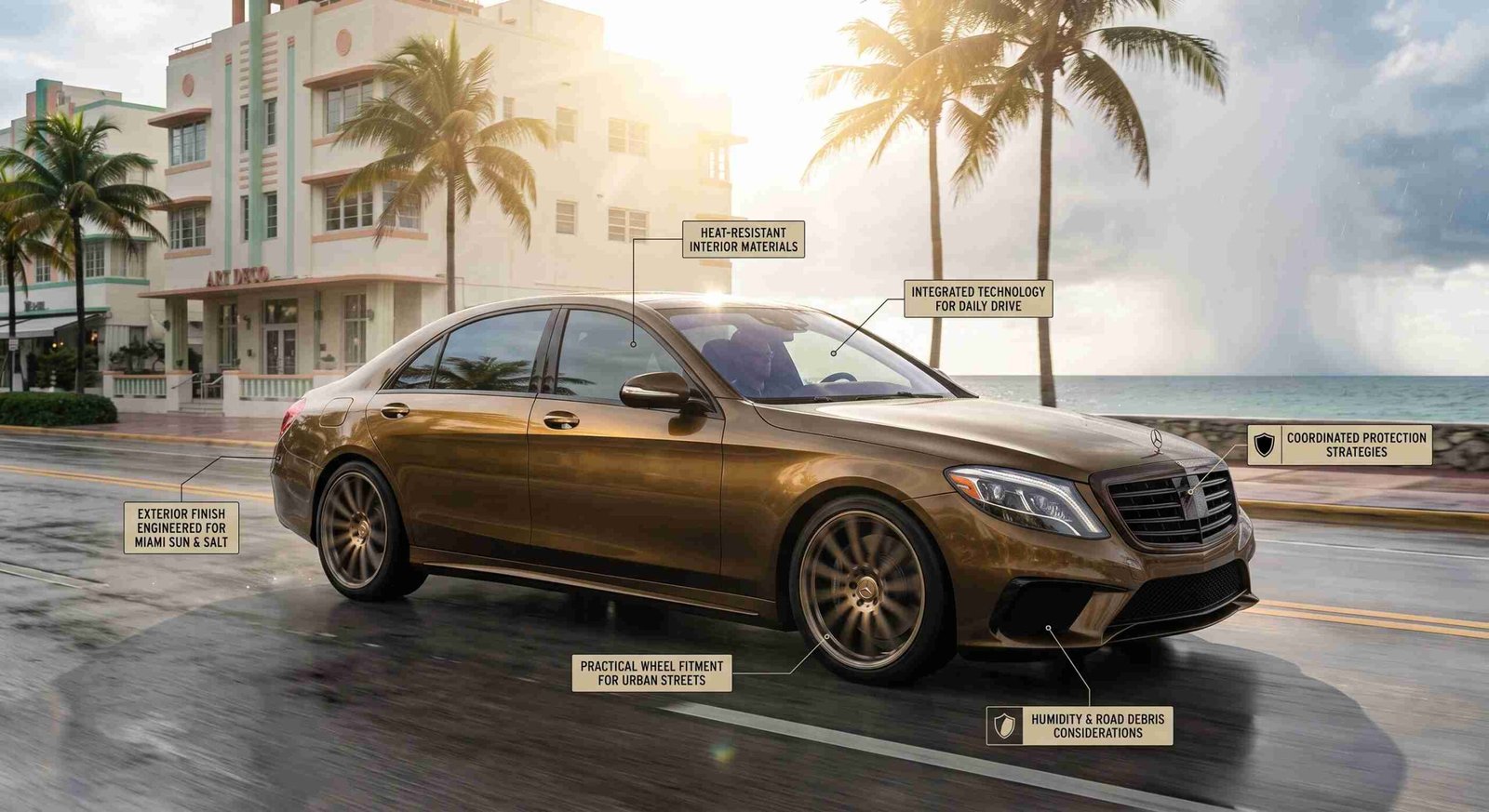
This distinction becomes particularly important in South Florida. Heat, intense sunlight, humidity, frequent rainfall, urban traffic, road surfaces, parking conditions, and coastal exposure can all influence how a customized vehicle performs and ages. Interior materials, exterior finishes, wheels, tires, electronics, protective treatments, and even ride height can be affected by the vehicle’s operating environment.
The objective of professional automotive customization is therefore not simply to create an impressive vehicle at the moment it leaves the shop. The objective is to create a vehicle that remains appropriate for its intended use.
The Vehicle’s Purpose Should Define the Customization Strategy
Before selecting individual modifications, the vehicle’s role needs to be established.
A daily-driven luxury vehicle has different requirements from a weekend show car. A vehicle used for long-distance highway travel needs different priorities from one that spends most of its time in urban traffic. A garage-kept vehicle has a different exposure profile from a car parked outdoors during working hours.
These distinctions affect nearly every customization decision.
For example, an owner who drives daily may prioritize durable finishes, comfortable interior materials, practical wheel and tire specifications, paint protection, reliable electronics, and easy maintenance. A show-oriented vehicle may place greater emphasis on visual detailing, specialized finishes, custom fabrication, and presentation.
Neither approach is universally appropriate. The correct build is the one that matches the vehicle’s actual operating requirements.
Miami’s Climate Can Influence Material Selection
Miami’s climate should be considered when choosing both exterior and interior materials.
Strong sunlight can place substantial demands on automotive surfaces and cabin materials. Heat can also affect how certain materials behave over time, particularly when a vehicle is repeatedly exposed to high temperatures.
This makes material selection more than a visual decision.
Interior leather, upholstery, trim materials, headliners, plastics, adhesives, and electronic components should be selected and installed with the vehicle’s environment in mind. Exterior finishes should also be evaluated according to expected exposure and maintenance habits.
A premium material is not automatically the correct material for every application. Its suitability depends on installation quality, environmental exposure, maintenance requirements, and the way the vehicle is used.
Daily Driving Changes the Engineering Priorities
A vehicle driven every day experiences considerably more operational stress than one that spends most of its time stored.
Daily driving introduces repeated braking, acceleration, turning, parking, road debris, weather exposure, traffic congestion, and frequent entry and exit. Interior surfaces experience more contact, while wheels and lower body areas encounter more contamination.
For a daily driver, customization should therefore balance appearance with practicality.
A visually dramatic modification may be unsuitable if it creates excessive clearance issues, makes maintenance difficult, or reduces everyday comfort. Professional customization should consider how the owner will actually interact with the vehicle after the project is finished.
The best high-end build is not necessarily the most extreme one. It is the one that remains functional within its intended environment.
Wheel and Tire Selection Should Reflect Real Road Use
Wheel selection is one area where aesthetics and practical engineering need to remain closely connected.
Large wheels, low-profile tires, aggressive offsets, and customized finishes can substantially alter a vehicle’s appearance. However, the selected combination also influences ride comfort, clearance, impact sensitivity, and everyday usability.
Miami driving conditions can include uneven pavement, road repairs, construction zones, parking structures, speed-control features, and urban traffic. A wheel and tire package should therefore be evaluated against the roads the vehicle will actually encounter.
Fitment is equally important. The wheel must work with the vehicle’s body, suspension, brakes, and available clearance. An aggressive stance that looks appropriate in photographs may be impractical if it creates rubbing or insufficient clearance during normal driving.
A professional high-end car customization Miami project should treat wheel selection as an engineering and usability decision rather than a purely cosmetic upgrade.
Ride Height Requires More Than Visual Consideration
Lowering a vehicle can dramatically change its stance, but ride height should be considered in relation to the owner’s driving environment.
A vehicle that regularly enters parking garages, navigates ramps, crosses uneven surfaces, or encounters steep driveways may require more practical clearance than a show-focused vehicle.
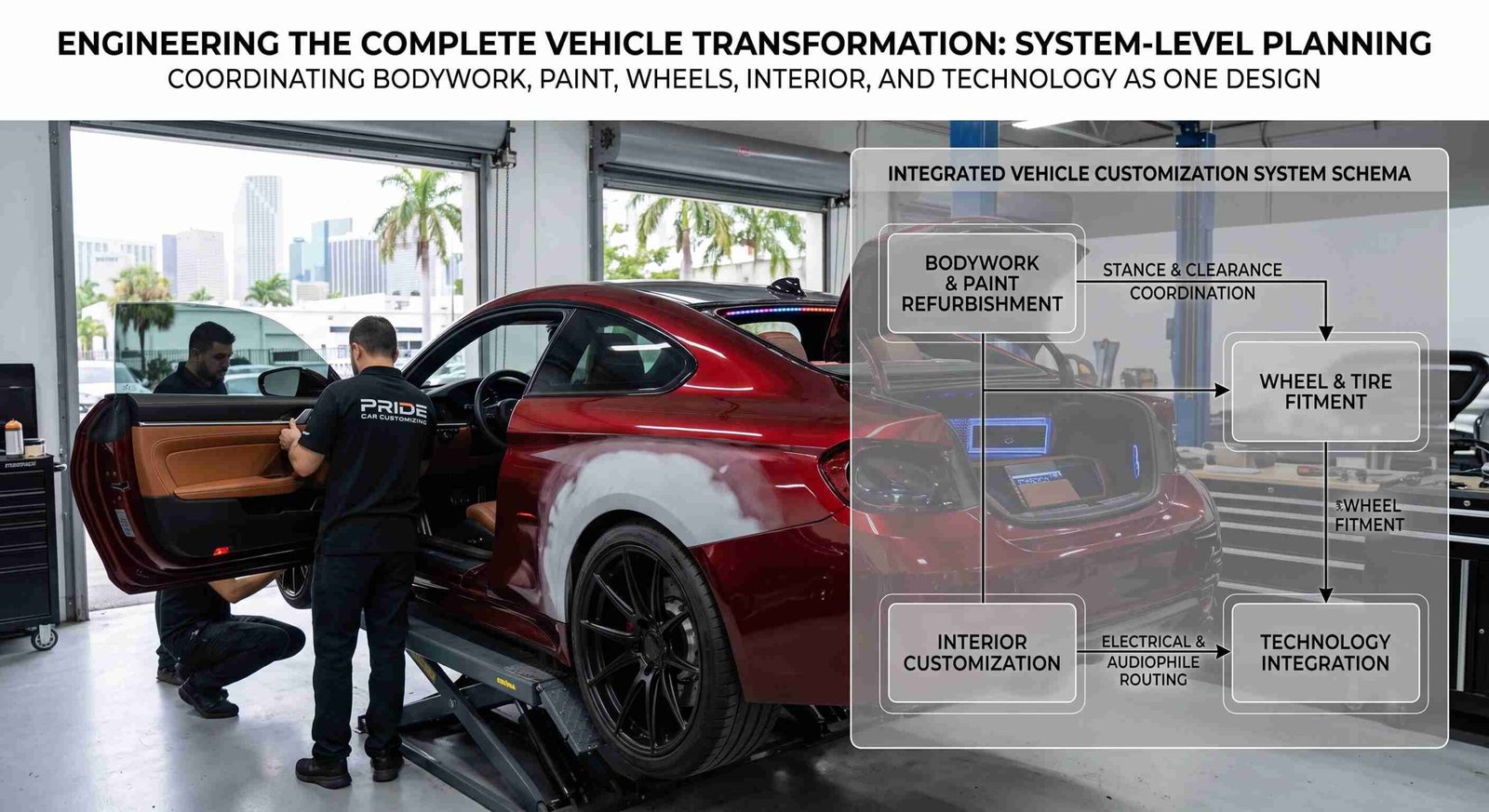
The relationship between ride height, wheel specifications, tire dimensions, body modifications, and suspension geometry should therefore be evaluated as a complete system.
The objective is to achieve the intended visual proportion without creating unnecessary limitations in everyday operation.
Interior Customization Should Account for Heat and Usage
Luxury interiors are often among the most visually significant parts of a custom vehicle, but they are also exposed to frequent environmental and physical stress.
A vehicle parked in the Miami sun can develop a significantly hotter cabin environment than the outside air temperature might suggest. Regular entry and exit also create repeated contact with seats, steering wheels, door panels, armrests, and other high-touch surfaces.
Material selection should therefore consider durability alongside appearance.
Stitching, leather or upholstery selection, trim materials, headliners, and decorative elements should be installed with both aesthetics and long-term use in mind. For frequently driven vehicles, surfaces that are easier to maintain may provide a more practical ownership experience than highly delicate materials.
A luxury interior should remain luxurious after months and years of use not only on delivery day.
Technology and Electronics Need Environmental Consideration
Modern custom vehicles frequently include upgraded sound systems, lighting, displays, connectivity features, and other electronic components.
These systems need to be installed with the vehicle’s existing electrical architecture and operating environment in mind.
Heat exposure, wiring organization, component placement, vibration, accessibility, and serviceability can all influence long-term reliability. Components should be mounted securely, wiring should be managed appropriately, and installations should avoid interference with existing vehicle systems.
The visual integration of technology matters as well. High-end customization should avoid creating an interior that looks improvised simply because additional electronics have been installed.
Technology should enhance the vehicle rather than become visually disconnected from it.
Exterior Finishes Should Match the Owner’s Maintenance Habits
A customized finish can require a different level of maintenance from a standard factory exterior.
Before selecting a specialized paint finish, vehicle owners should consider how frequently the vehicle will be washed, where it will be parked, whether professional detailing will be performed, and how much surface maintenance they are prepared to undertake.
Gloss, satin, matte, metallic, and other finishes can create very different maintenance requirements and visual characteristics.
The right choice depends not only on the desired appearance but also on ownership habits.
This is particularly relevant for owners who want a premium finish but use their vehicles extensively. A customization strategy that ignores maintenance can produce unnecessary frustration after the initial project is complete.
Protection Should Be Planned Around Actual Exposure
Protective solutions should also be selected according to vehicle use.
A daily-driven vehicle that spends significant time on highways may experience more road debris and environmental contamination than a weekend vehicle that is mostly stored indoors. Conversely, a garage-kept show vehicle may have lower driving exposure but require careful presentation and surface maintenance.
Paint protection film can provide a physical protective layer in selected areas, while ceramic coatings can contribute surface properties that support cleaning and maintenance. Detailing and appropriate washing practices also remain important.
The key is matching the protection strategy to exposure rather than automatically applying the same package to every vehicle.
Coastal and Urban Conditions Matter
Miami vehicle owners may encounter both urban and coastal environmental conditions.
Vehicles operated near coastal areas can experience exposure to salt-containing air and moisture, while urban vehicles encounter road contaminants, brake dust, construction debris, and other pollutants.
These conditions can influence maintenance requirements for exterior surfaces, wheels, trim, and other components.
Customization should therefore include consideration of how easily surfaces can be cleaned and maintained. Wheel finishes, exterior materials, protective treatments, and detailing procedures should work together as part of a realistic ownership plan.
Storage Conditions Can Change the Build
Where a vehicle is stored can be almost as important as where it is driven.
A climate-controlled garage provides a substantially different environment from outdoor parking. Covered parking can reduce direct sunlight exposure, while enclosed storage can reduce certain environmental contaminants.
Owners who have consistent indoor storage may have more flexibility with delicate finishes and presentation-focused modifications. Vehicles parked outdoors more frequently may benefit from a greater emphasis on durable materials, surface protection, and practical maintenance.
A professional customization consultation should therefore consider storage habits before recommending an extensive modification package.
Weekend, Show, and Collector Vehicles Require a Different Approach
Not every customized vehicle is intended to be a daily driver.
A weekend or show vehicle may allow greater emphasis on specialized finishes, intricate interior work, custom detailing, unique wheel configurations, and other presentation-focused modifications.
Because the vehicle may accumulate fewer driving miles, certain compromises in convenience or maintenance may be acceptable to the owner.
However, even show-focused builds require careful engineering. A vehicle still needs appropriate fitment, secure installation, functional systems, and proper assembly. A visually impressive build should not sacrifice fundamental vehicle functionality.
Long-Term Ownership Should Influence the Build
A customization project should be evaluated across its expected ownership period rather than only at completion.
Owners should consider whether modifications can be maintained, repaired, refinished, or replaced in the future. They should also think about how easily certain components can be serviced and whether documentation will be available for future work.
This becomes particularly relevant when multiple systems are modified at once.
A professional luxury vehicle customization Miami project should ideally leave the owner with a clear understanding of what was changed and how those modifications should be maintained.
Practical Customization Does Not Mean Boring Customization
Engineering around real-world conditions does not require sacrificing individuality.
A vehicle can still receive distinctive paint, custom wheels, premium interiors, specialized lighting, body modifications, vehicle wraps, detailing, sound systems, and other upgrades while remaining practical for its intended use.
The difference is that the modifications are selected deliberately.
A daily-driven Miami vehicle can have an aggressive visual identity while maintaining reasonable clearance and usable wheel specifications. A luxury interior can be highly customized while using materials appropriate for regular use. A distinctive exterior finish can be combined with a protection and maintenance strategy suited to the owner’s habits.
Good customization works within the vehicle’s operating reality rather than ignoring it.
Professional Planning Reduces Conflicting Modifications
One of the most common problems in complex customization is making decisions independently.
Selecting wheels without considering body modifications, choosing interior materials without considering usage, or adding technology without considering electrical integration can create conflicts later.
Professional customization requires the entire project to be viewed as a connected system.
The vehicle’s condition, intended use, storage environment, modification scope, material choices, fitment requirements, protection strategy, and maintenance expectations should all be considered before final decisions are made.
This approach can help prevent modifications that look attractive individually but become impractical when combined.
Building for the Vehicle You Actually Own
There is no universal formula for high-end automotive customization.
A Miami owner who drives a luxury vehicle to work every day has different priorities from someone who takes a performance car to shows on weekends. Someone who parks outdoors has different environmental considerations from someone with controlled indoor storage.
That is why professional automotive customization Miami should begin with questions about the vehicle’s actual life.
How often is it driven? Where is it parked? What roads does it regularly encounter? How much maintenance is acceptable? Is comfort important? Is the vehicle primarily for transportation, recreation, display, or a combination of these purposes?
The answers provide a technical foundation for deciding which modifications make sense.
Build a Vehicle Around Its Real-World Environment
High-end customization should not be separated from the conditions in which a vehicle actually operates. Miami’s climate, urban roads, driving patterns, parking environments, and ownership habits can all influence how a customized vehicle should be engineered.
The strongest results come from matching the modification strategy to the vehicle’s real purpose. Exterior finishes, wheels, bodywork, interiors, technology, and protection should be selected with both appearance and long-term usability in mind.
For vehicle owners considering automotive customization in Miami, Pride Car Customizing Body Shop Miami can provide professional solutions across bodywork and paint, wheel and caliper painting, custom interiors, vehicle wraps, detailing, sound systems, paint protection, and other automotive customization services.
Pride Car Customizing Body Shop Miami
2400 NW 7th Ave, Miami, FL 33127
Phone: +1 305-498-6789