Engineering a Complete Vehicle Transformation Coordinating Bodywork, Paint, Wheels, Interior, and Technology as One Design
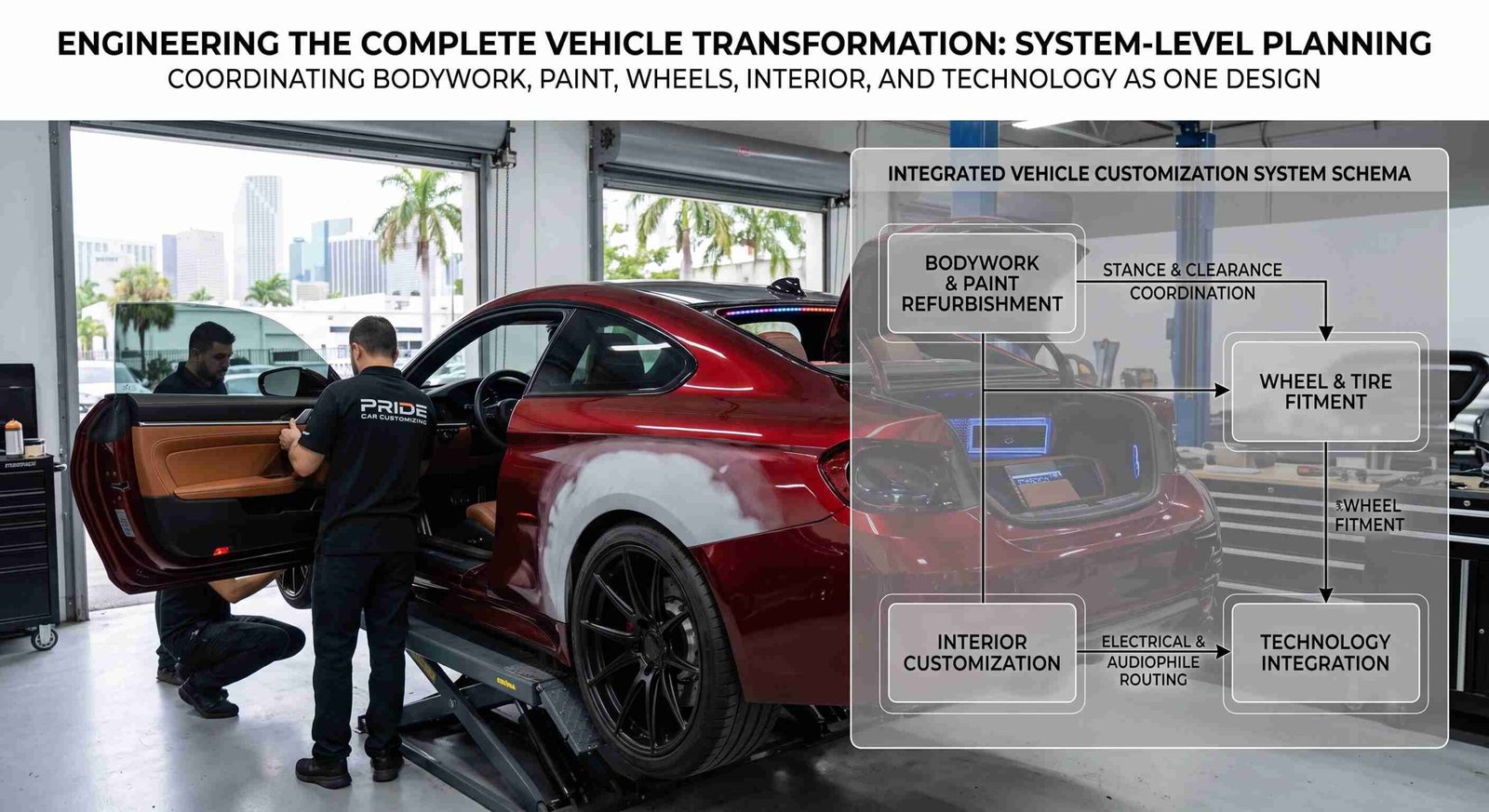
A complete vehicle transformation is considerably more complex than installing several individual upgrades. When bodywork, paint, wheels, interior materials, electronics, sound systems, lighting, and other modifications are performed independently, the finished vehicle can suffer from compatibility problems, inconsistent detailing, poor fitment, or a lack of functional integration. Professional complete car customization in Miami requires these systems to be considered together from the beginning. The objective is not simply to modify every visible area of a vehicle. It is to create a finished automobile in which each component supports the others mechanically, visually, and functionally. A change to the exterior can affect wheel selection. Wheel and tire specifications can influence stance and clearance. Interior modifications can affect electrical requirements. Technology upgrades can require careful routing and integration. Paint and bodywork must also be coordinated with disassembly and reassembly procedures.
This systems-based approach is what separates a collection of aftermarket modifications from a professionally engineered vehicle transformation.
Why Complete Customization Requires System-Level Planning
Modern vehicles are highly integrated machines. Even seemingly independent components can have relationships with other systems. For example, changing wheel and tire specifications can influence clearance, ride characteristics, and the visual relationship between the body and road surface. Adding interior electronics can create additional wiring and power requirements. Body modifications may require adjustments to mounting points, trim, or surrounding components.
A professional customization project therefore needs an understanding of dependencies between different parts of the vehicle.
Instead of asking whether each individual upgrade looks good on its own, the more important question is whether the modification works correctly within the entire vehicle. This includes physical fitment, electrical compatibility, material transitions, serviceability, durability, and the overall visual result.
That is the foundation of full vehicle customization in Miami.
Bodywork Establishes the Physical Foundation
Bodywork is one of the most important interfaces in a complete transformation because it determines how many other exterior components will fit and appear.
Custom body modifications can involve repairing existing surfaces, reshaping panels, modifying exterior components, preparing surfaces for refinishing, or fabricating specific elements. The quality of these operations directly affects paint, trim, lighting, and wheel presentation.
A panel that is visually acceptable from a distance may still create problems when combined with custom components. Uneven transitions, inconsistent panel gaps, incorrect mounting positions, or poorly finished edges can become much more obvious after the vehicle receives a high-quality paint finish.
For that reason, bodywork should be evaluated not only as an isolated service but as an interface between multiple vehicle systems.
Paint Should Support the Entire Transformation
Paint is often treated as the final visual stage of a customization project, but its relationship with the rest of the vehicle begins much earlier.
Once bodywork is completed, the condition of the surface determines how effectively the paint system can reproduce the intended finish. At the same time, the selected color and finish influence how wheels, exterior trim, lighting, glass, and interior materials are perceived.
A complete transformation may require a finish that emphasizes body contours rather than simply changing the vehicle’s color. Gloss, satin, metallic, pearl, and other finishes can produce different visual relationships with surrounding components.
Paint also creates a transition between modified and original components. If these areas are not properly coordinated, the finished vehicle can appear assembled from separate projects rather than transformed as one automobile.
Professional custom car transformation in Miami therefore requires body preparation, paint selection, application, reassembly, and final inspection to be considered as connected operations.
Wheel and Tire Fitment Must Work With the Body
Wheels are another major integration point. Their diameter, width, offset, tire dimensions, and overall design influence the vehicle’s stance and relationship with the modified body.
A wheel can look impressive by itself while being inappropriate for the completed vehicle. Excessive wheel size, incorrect offset, insufficient clearance, or an unsuitable tire profile can create both aesthetic and functional problems.
Professional fitment considers the wheel relative to the vehicle’s body geometry. The relationship between the wheel arch, tire sidewall, ride height, and surrounding bodywork needs to remain intentional.
This becomes particularly important when body modifications change the original exterior geometry. A wheel package selected before those changes may not provide the desired final result.
The goal is controlled integration rather than simply selecting the largest or most visually dramatic wheel available.
Interior Customization Is an Extension of the Exterior
A complete vehicle should not feel heavily modified outside while remaining disconnected inside.
Interior customization can involve upholstery, leather or other premium materials, custom trim, headliners, lighting, sound systems, steering-wheel treatments, and other interior programs. Each element introduces its own material, fitment, electrical, and ergonomic considerations.
The interior should support the vehicle’s overall character without becoming a separate visual concept.
Material selection is particularly important. Leather texture, stitching, trim finish, accent colors, and lighting temperature can either reinforce the exterior transformation or create visual conflict. Professional installation also requires attention to seams, edges, mounting points, clearances, and areas that receive frequent contact.
A comprehensive customization project considers the cabin as part of the same vehicle rather than an independent room inside it.
Technology Adds Another Layer of Integration
Modern customization increasingly involves technology. Sound systems, lighting, displays, connectivity features, and other electronic upgrades can dramatically change the user experience, but they must be installed without compromising the vehicle’s existing systems.
Electrical integration requires careful planning. Wiring should be routed and secured appropriately, connections should be accessible where necessary, and components should be positioned without interfering with moving parts, heat sources, airbags, controls, or other critical vehicle systems.
Technology also needs to remain visually integrated. Exposed wiring, poorly positioned controls, mismatched components, or improvised mounting solutions can undermine an otherwise high-end transformation.
The best results make technology feel like part of the vehicle rather than an accessory attached afterward.
The Importance of Interfaces Between Different Systems
One of the biggest challenges in comprehensive car customization in Miami is managing the interfaces between different work areas.
Consider a vehicle receiving body modifications, a new paint finish, custom wheels, interior work, and an upgraded sound system. Each category has its own requirements, but the project also contains several points where those categories overlap.
Bodywork interfaces with paint.
Paint interfaces with trim and reassembly.
Wheels interface with body clearance and stance.
Interior work interfaces with electrical systems.
Technology interfaces with power, wiring, controls, and interior architecture.
These interfaces are where many quality problems emerge. A customization shop must therefore manage not just individual craftsmanship but the compatibility between completed components.
Sequencing Matters More Than It Appears
The order in which customization work is performed can affect both quality and efficiency.
Major fabrication and body modifications generally need to be resolved before final paint. Components that require precise fitment should be test-fitted before surfaces receive their final finish. Electrical systems should be planned before interior panels are permanently installed. Wheels and tires may need to be confirmed before final stance decisions are made.
This does not mean every project follows exactly the same sequence. Different vehicles and modification scopes require different workflows.
What matters is that the sequence reflects the dependencies between systems.
Poor sequencing can create unnecessary disassembly, damaged finished surfaces, duplicated labor, and compatibility issues. Proper sequencing reduces those risks while making final assembly more controlled.
Customization Requires Compatibility Testing
A finished vehicle should not be judged only while it is stationary and freshly detailed.
A professional transformation should also be evaluated for functional behavior. Doors, panels, trim, controls, interior components, and other modified areas should operate correctly. Wheels and tires should have appropriate clearance throughout the vehicle’s operating range. Electrical systems should function consistently. Interior components should remain secure.
Final inspection should also examine transitions between modified and original components. This is where small inconsistencies can become noticeable.
The purpose of quality control is not merely to find cosmetic defects. It is to confirm that the different systems work together as intended.
Designing for Maintenance and Serviceability
A highly customized vehicle still needs to be maintained.
This consideration is frequently overlooked when multiple systems are installed together. A component may look excellent but become difficult to service if access points are blocked or wiring and trim are installed without consideration for future maintenance.
Professional customization should account for service access wherever practical. Panels should be assembled carefully, electrical components should be organized, and removable components should remain appropriately accessible.
This becomes especially valuable for owners who intend to keep their vehicles for many years.
A complete transformation should improve the vehicle without making every future maintenance task unnecessarily complicated.
Miami Conditions Should Be Part of the Engineering Decision
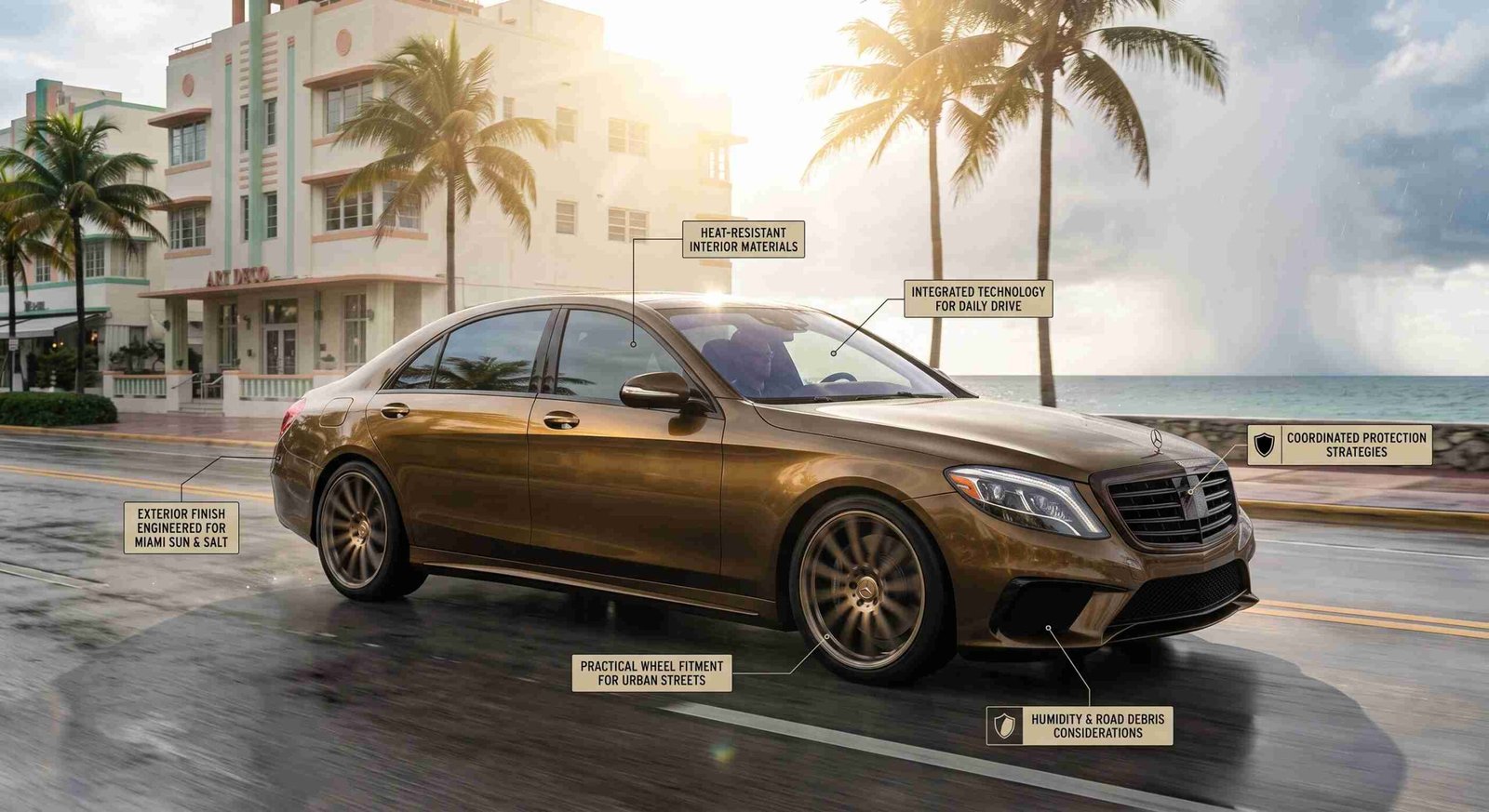
A customized vehicle in Miami operates in a demanding environment. Heat, intense sunlight, humidity, rain, and coastal conditions can influence exterior finishes, interior materials, electronics, and maintenance requirements.
That does not mean every vehicle needs the same protection strategy. The appropriate approach depends on how the vehicle is used, where it is stored, how frequently it is driven, and which materials and finishes have been selected.
Exterior protection may be particularly relevant for customized paintwork. Interior materials may require appropriate cleaning and conditioning. Electronic components should be installed with proper consideration for the vehicle environment.
These factors should be considered during the customization process rather than after the project is complete.
Why Integration Is More Important Than the Number of Modifications
A vehicle does not become professionally customized simply because it contains more modifications.
In fact, adding too many unrelated components can make integration more difficult. The strongest transformations are usually defined by consistency, compatibility, and execution.
A complete project should have a clear relationship between its physical components and its intended use. Bodywork should accommodate the selected wheels. Paint should complement the vehicle’s modified surfaces. Interior materials should support the exterior character. Technology should improve functionality without disrupting the cabin.
The result should feel intentional from every angle.
Professional Vehicle Customization Requires Cross-Discipline Expertise
A sophisticated transformation can involve multiple areas of automotive craftsmanship. Body repair and fabrication require different expertise from paint refinishing. Interior upholstery requires different technical skills from electronic installation. Wheel fitment involves specifications that are different from those used in exterior detailing.
The challenge is coordinating these disciplines around one finished vehicle.
This is why choosing a professional shop for professional vehicle customization in Miami involves more than looking at photographs of individual services. Vehicle owners should evaluate whether the shop can manage relationships between different modification categories and maintain consistent standards throughout the project.
The quality of the final result depends on the weakest interface as much as it depends on the strongest individual component.
Creating a Transformation That Feels Factory-Integrated
The ultimate objective of complete customization is not necessarily to make every component look aftermarket. Instead, a high-quality transformation can make the modifications appear deliberately engineered for the vehicle.
This requires consistent fitment, controlled transitions, properly finished surfaces, organized technology, appropriate material selection, and careful final assembly.
When those elements are executed correctly, the vehicle can have a significantly different identity while still feeling like one coherent automobile.
That is the real value of integrated customization: the owner receives a transformation rather than a collection of disconnected upgrades.
Transform Your Vehicle With an Integrated Approach
A successful vehicle transformation is ultimately an exercise in coordination. Bodywork, paint, wheels, interior craftsmanship, electronics, and finishing should not operate as isolated upgrades. They need to function together as parts of one engineered vehicle.
For owners considering complete car customization in Miami, the most important consideration is therefore not simply how many modifications can be added. It is how effectively those modifications can be integrated into the vehicle’s physical structure, visual identity, electrical systems, interior environment, and long-term ownership requirements.
Pride Car Customizing Body Shop Miami provides professional automotive customization and related services for vehicle owners seeking a carefully executed transformation. From bodywork and paint to custom interiors, wheel and caliper painting, sound systems, vehicle wraps, detailing, paint protection, and other customization solutions, each project can be approached according to the vehicle’s specific requirements.
Pride Car Customizing Body Shop Miami
2400 NW 7th Ave, Miami, FL 33127
Phone: +1 305-498-6789