Integrating Exterior Protection Into a Custom Build PPF, Ceramic Coating, Paint Refinishing, and Long-Term Finish Management
A custom vehicle should not be considered complete simply because the bodywork, paint, wheels, and other modifications have been finished. The exterior finish represents a significant investment in both craftsmanship and materials, and protecting that work should be considered part of the overall build rather than an afterthought. For owners considering PPF and ceramic coating in Miami, the important question is not simply which protection product to choose. The more useful question is how each system fits into the vehicle’s complete finish strategy. Paint protection film, ceramic coatings, refinishing, paint correction, and routine maintenance serve different purposes. When they are selected and installed according to the vehicle’s condition, finish type, driving habits, and modification level, they can work together as a coordinated exterior protection system.
Protection Should Be Planned Before the Build Is Finished
The best time to think about exterior protection is before the final stages of a custom project.
A custom vehicle may receive newly painted panels, repaired bodywork, aftermarket components, wheels, trim, and specialty finishes. Each surface can have different protection requirements. Planning early allows the owner and customization provider to determine which areas should receive film, which surfaces are appropriate for a coating, and whether newly refinished areas require additional curing time before protection is installed. This approach helps prevent a common mistake: completing an expensive custom build and only afterward trying to determine how to protect it.
Paint Refinishing and Protection Serve Different Purposes
Paint refinishing changes or restores the surface itself. Protection systems are designed to help preserve that surface after the refinishing work is complete. This distinction is important. If paint contains significant defects, oxidation, scratches, or surface irregularities, protection should not be viewed as a replacement for proper paintwork. The underlying surface should be appropriately prepared before a protective product is applied. A custom vehicle with excellent paintwork provides a much stronger foundation for long-term protection.
What Paint Protection Film Actually Does
Paint protection film, commonly called PPF, is a physical film applied to selected painted surfaces.
Its primary purpose is to create a sacrificial layer between the vehicle’s paint and certain forms of physical contamination or road exposure. Depending on the specific film system, it can help reduce the impact of stone chips, road debris, light abrasions, and other everyday surface hazards.
PPF is particularly useful in areas that receive greater exposure.
The front bumper, leading hood area, front fenders, mirrors, rocker panels, and other high-contact zones can be considered depending on the vehicle and driving conditions.
The advantage of PPF is fundamentally different from that of a coating. Film provides physical material between the environment and the underlying paint.
Where PPF Makes Sense on a Custom Vehicle
A complete vehicle does not necessarily need identical PPF coverage everywhere.
A customized vehicle can be evaluated according to its exposure pattern.
A frequently driven performance vehicle may benefit from greater coverage across front-facing areas. A luxury vehicle used primarily for occasional driving may require a different strategy. A vehicle with extensive custom paint may also justify broader coverage because protecting the newly refinished surface is a major priority.
The objective is to place physical protection where it provides meaningful benefit rather than automatically treating every panel identically.
Ceramic Coating Provides a Different Type of Protection
Ceramic coating is a liquid-applied protective system that chemically bonds or interacts with the vehicle’s prepared surface according to the formulation and application process.
Unlike PPF, it does not create a comparable physical film thickness designed primarily to absorb stone-chip impacts.
Instead, ceramic coatings are commonly used to improve surface characteristics such as water behavior, ease of cleaning, gloss, and resistance to certain environmental contaminants.
This makes ceramic coating particularly useful as part of a maintenance-oriented protection strategy.
For ceramic coating in Miami, professional preparation and application are important because the coating’s performance depends heavily on the condition of the surface underneath it.
PPF and Ceramic Coating Can Work Together
PPF and ceramic coating are not necessarily competing solutions.
They can be used together when their roles are clearly understood.
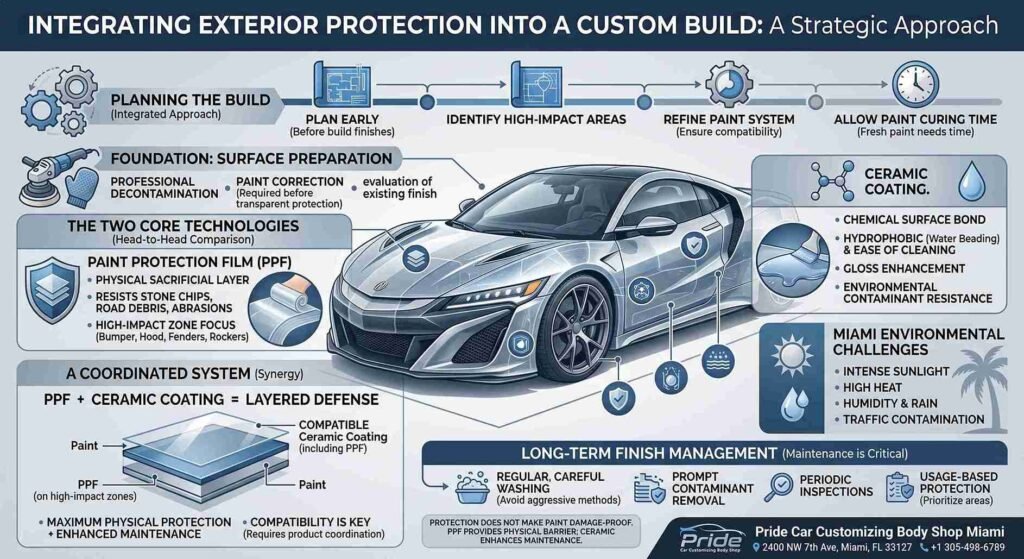
PPF can provide physical protection on selected areas, while a compatible ceramic coating can be used over appropriate surfaces to improve cleanability and provide additional surface protection.
This can create a layered protection strategy.
However, compatibility matters. Not every coating is designed for every film, and application should follow the specifications of the particular products being used.
The correct combination should therefore be determined based on the film and coating system rather than assuming that any two products can automatically be combined.
Surface Preparation Is Critical Before Protection
Protective products do not eliminate the need for surface preparation.
Before PPF or ceramic coating is installed, the vehicle’s exterior should be appropriately cleaned and prepared. Depending on the condition, this may involve decontamination, paint correction, polishing, or other surface preparation.
Any imperfections present before a transparent protective layer is installed may remain visible afterward.
This is particularly important on custom vehicles because newly painted surfaces and modified bodywork are often inspected closely.
Professional custom car paint protection in Miami should therefore begin with an honest evaluation of the existing finish.
New Paint Requires Appropriate Curing Time
Freshly refinished automotive paint requires time to complete its curing process.
The appropriate waiting period depends on the paint system, refinishing materials, application conditions, and manufacturer recommendations.
Installing protection too early can interfere with the intended curing process or create complications with adhesion and application.
This is one reason communication between the paint and protection stages is important when a custom vehicle is being built at different stages.
The protection schedule should be based on the actual paint system rather than a generic timeline.
PPF Installation Quality Matters
The quality of PPF installation can influence both appearance and longevity.
The film needs to be positioned accurately, applied without unwanted contamination, and finished cleanly around edges and complex surfaces.
Poor installation can produce visible lifting, contamination beneath the film, uneven edges, or an inconsistent appearance.
On a highly customized vehicle, these issues can be particularly noticeable because the owner has already invested heavily in achieving a refined exterior finish.
Professional PPF installation in Miami should therefore emphasize precision as well as coverage.
Ceramic Coating Application Also Requires Precision
Ceramic coating installation is not simply a matter of spreading a liquid across the vehicle.
The surface needs to be properly prepared, environmental conditions need to be controlled, and the coating needs to be applied and leveled according to the product’s requirements.
If residue is not properly removed during installation, high spots or uneven visual characteristics can become visible after the coating cures.
The quality of preparation and application can therefore have as much influence on the final result as the coating product itself.
Custom Paint Requires Special Consideration
A custom-painted vehicle can contain more complex surfaces than a standard factory finish.
Specialty colors, metallics, pearls, matte finishes, multi-stage systems, and custom graphics may each require specific protection considerations.
For example, matte or satin finishes should not automatically be treated like traditional gloss paint. Certain correction and polishing processes that are appropriate for gloss surfaces may permanently alter the appearance of a low-gloss finish.
The protection strategy must therefore be compatible with the actual finish rather than simply the vehicle model.
Protecting Carbon Fiber and Other Materials
Custom builds often incorporate materials beyond painted metal.
Carbon fiber, composite components, polished metal, gloss-black trim, wheels, and other specialty surfaces may require different maintenance and protection approaches.
A ceramic coating designed for painted surfaces may not be the appropriate product for every material.
This is another reason a complete exterior assessment is valuable before protection begins.
Each surface should be identified and treated according to its characteristics.
High-Impact Areas Deserve Priority
Not every part of the vehicle experiences the same level of exposure.
Front-facing surfaces generally encounter more road debris. Lower body areas can receive greater contamination from road spray. Door edges and handles can experience frequent contact. Rocker panels can receive dirt and debris from the road.
A protection strategy can therefore prioritize areas according to real-world exposure.
This usage-based approach can be more practical than selecting a protection package solely according to vehicle size.
Protection Should Complement the Design
Protection should not compromise the appearance of a custom vehicle.
Transparent PPF is designed to preserve the appearance beneath it, but installation quality remains important. Edges, transitions, complex body contours, and custom components need to be handled carefully.
Similarly, ceramic coatings should enhance the surface characteristics without changing the intended character of the finish in an undesirable way.
The goal is to protect the design rather than interfere with it.
Miami Driving Conditions Make Maintenance Important
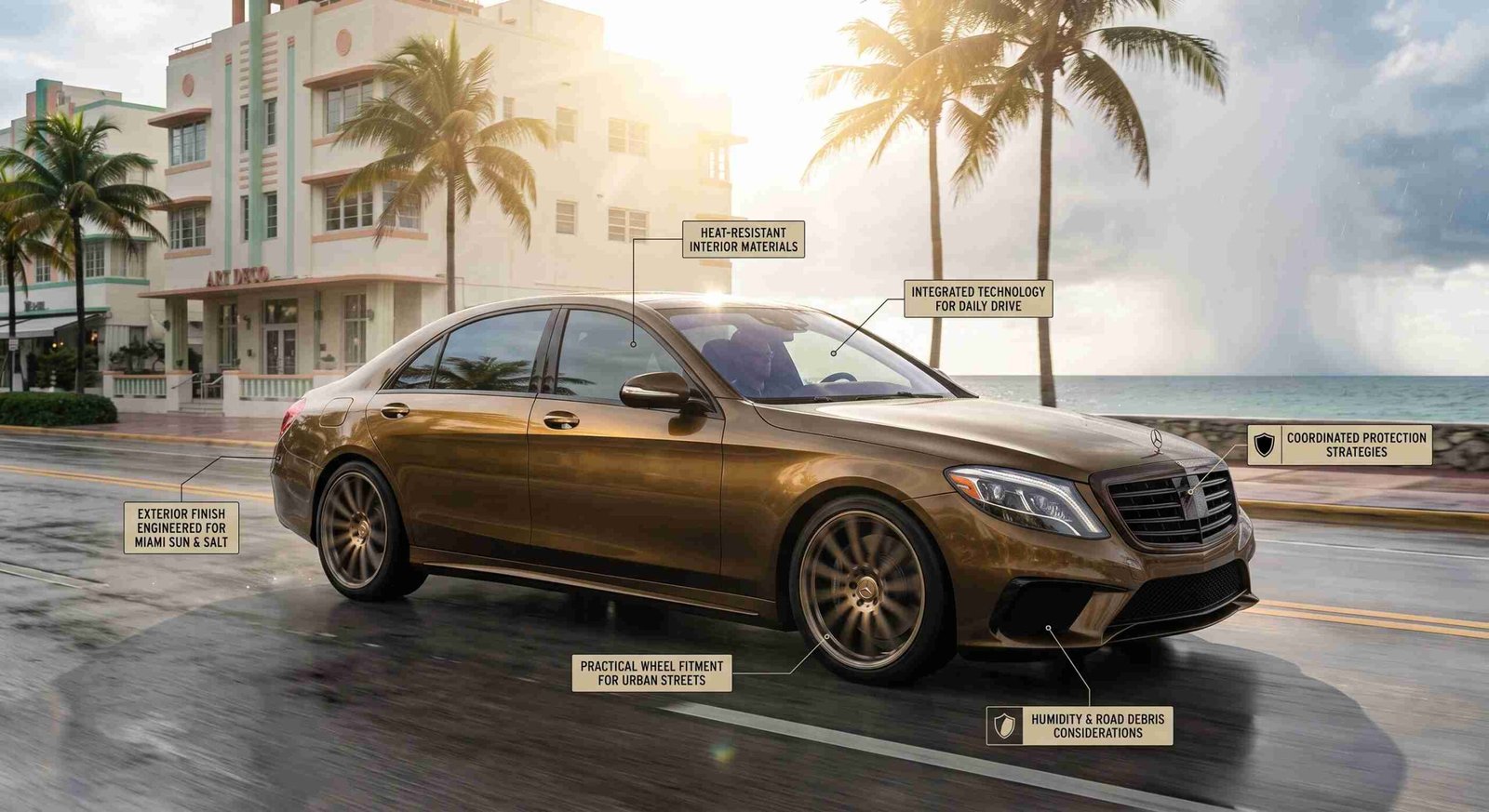
A vehicle in Miami can experience intense sunlight, heat, humidity, rain, traffic contamination, and frequent exposure to outdoor conditions.
Protection can reduce certain forms of surface exposure, but it does not eliminate the need for maintenance.
Regular washing, appropriate drying methods, careful removal of contaminants, and compatible detailing products remain important.
A protective system works best when it is treated as part of a broader maintenance routine.
Ceramic Coating Does Not Make Paint Damage-Proof
One of the most important points for vehicle owners to understand is that ceramic coating is not an invisible armor system. It can improve certain surface characteristics and make maintenance easier, but it does not provide the same type of physical protection as PPF. Heavy road debris, deep scratches, collisions, and other significant impacts can still damage coated paint. Understanding the difference helps owners choose protection based on actual expectations rather than marketing terminology.
PPF Does Not Eliminate the Need for Care
PPF is designed to absorb certain types of surface exposure, but it still requires appropriate maintenance. Aggressive chemicals, improper washing techniques, sharp objects, and environmental contamination can affect the film. Owners should follow the manufacturer’s care recommendations and use appropriate products. Regular inspection is also useful. Early attention to lifting edges or damaged areas can help prevent a localized problem from becoming more extensive.
Protection and Paint Correction Should Be Coordinated
Paint correction can improve the condition and appearance of a paint surface before protection is installed. However, the correction strategy depends on the final protection system. If PPF is planned for a particular panel, that panel should be prepared appropriately before film installation. If ceramic coating is planned, the paint should be refined to the desired condition before the coating is applied. This coordination avoids unnecessary duplication of work and helps establish a cleaner foundation.
Long-Term Finish Management Is an Ongoing Process
A high-quality custom finish should be treated as a long-term asset.
The protection system should be inspected periodically, maintenance should remain consistent, and any damage should be addressed before it becomes more extensive. This is particularly relevant for custom-painted vehicles because repainting a specialized color or finish can be more complicated than repairing a conventional factory finish. Keeping the surface protected from the beginning can help preserve the investment in the custom work.
When Full PPF Coverage May Be Appropriate
Full-vehicle PPF can be considered for certain owners who prioritize maximum physical protection across the painted exterior. This can be particularly relevant for high-value vehicles, extensively customized vehicles, or cars that are driven frequently. However, full coverage is not automatically necessary for every vehicle. The decision should consider driving frequency, vehicle value, paint sensitivity, parking conditions, road exposure, and the owner’s expectations. A professional consultation can help determine whether full, partial, or targeted coverage is appropriate.
When Ceramic Coating May Be the Better Focus
Ceramic coating can be attractive for owners primarily concerned with surface maintenance, gloss, water behavior, and environmental contamination. It can also complement PPF-covered areas when the selected products are compatible. For a vehicle that receives limited road exposure but is carefully maintained, a coating-focused strategy may provide an appropriate balance between protection and maintenance.
Again, the correct solution depends on how the vehicle is used.
Combining Protection With a Customization Project
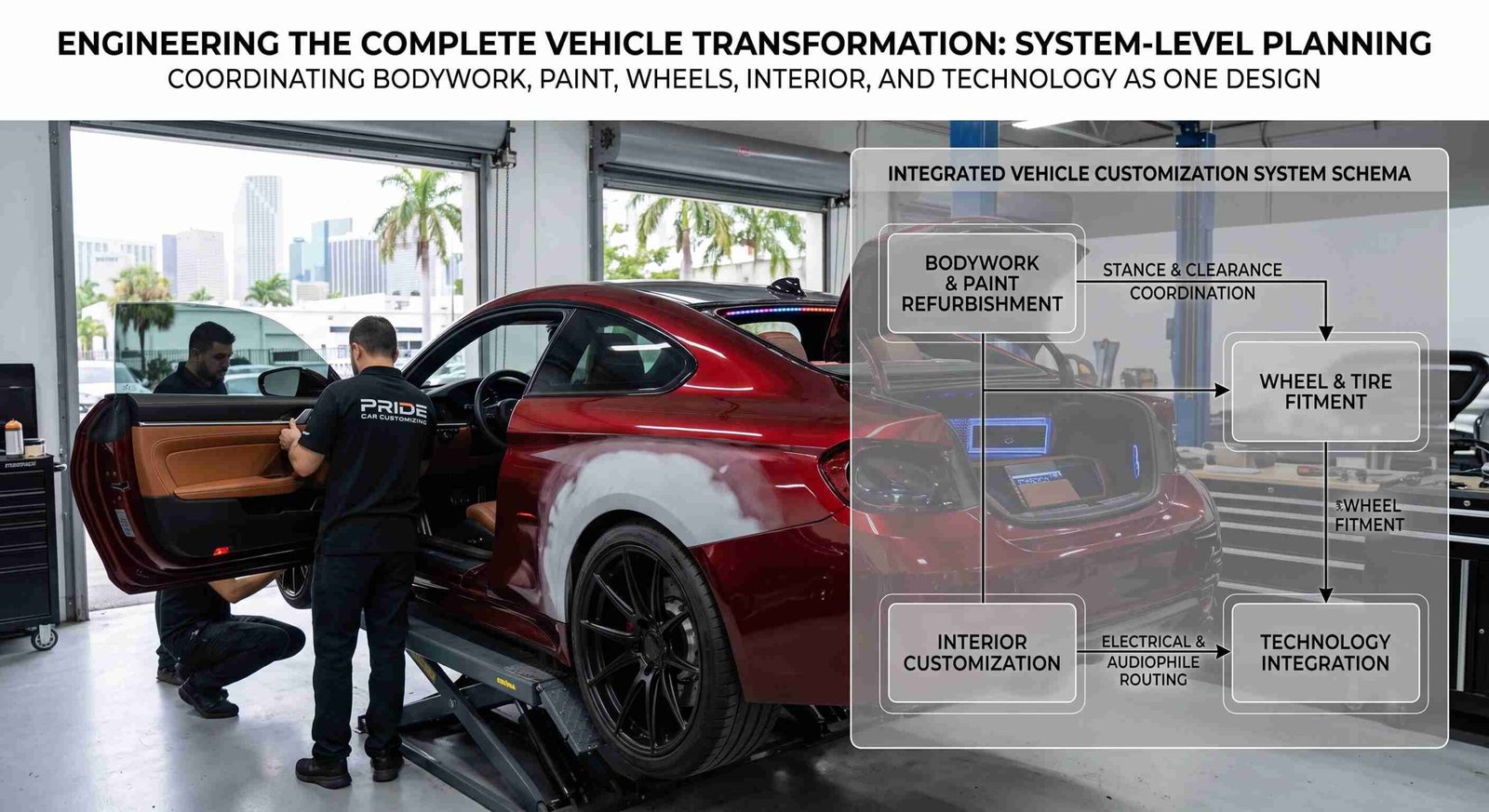
Integrating protection into the customization process can be more efficient than treating it as a completely separate service. A project might involve bodywork, custom paint, refinishing, wheel work, detailing, PPF, and ceramic coating in a coordinated sequence. Each stage should be completed in the correct order. Surface preparation should precede protection. Fresh paint should reach the appropriate curing stage. PPF should be installed before any compatible coating intended for its surface. Final inspection should confirm that all protected areas remain clean and properly finished. This sequencing helps protect the investment made during the earlier stages of the build.
Professional PPF and Ceramic Coating in Miami
Exterior protection should be considered part of the vehicle’s long-term customization strategy rather than an optional final decoration. At Pride Car Customizing Body Shop Miami, vehicle owners can explore paint refinishing, custom automotive work, detailing, paint protection film, ceramic coating, and other services according to the requirements of their vehicle. For owners researching PPF and ceramic coating in Miami, the most important consideration is understanding what each system is designed to accomplish. PPF provides physical film-based protection, while ceramic coating provides a different form of surface protection and maintenance enhancement. Neither replaces quality paintwork or proper care. When paint refinishing, surface preparation, PPF, ceramic coating, and maintenance are planned together, the result is a more comprehensive approach to protecting a custom vehicle’s exterior.
Conclusion
Protecting a custom vehicle should begin before the final stage of the build. Paint refinishing creates the finished surface, PPF provides a physical protective layer in selected areas, ceramic coating adds a different form of surface protection and maintenance benefit, and ongoing care helps preserve the entire system. For Miami vehicle owners, this coordinated approach can be particularly valuable because exterior finishes regularly encounter heat, sunlight, rain, road contaminants, and everyday driving conditions. The right protection strategy is ultimately determined by the vehicle, its finish, how it is driven, and what the owner wants to preserve. With proper preparation, compatible materials, precise installation, and consistent maintenance, PPF and ceramic coating in Miami can become an integrated part of a professionally customized vehicle rather than an afterthought.
Pride Car Customizing Body Shop Miami
2400 NW 7th Ave, Miami, FL 33127
Phone: +1 305-498-6789